The Supreme Court
The current court: who sits on it, how they vote, where their cases come from, and what our model, VotePredictor SCOTUS, expects case by case. VotePredictor SCOTUS predicts each justice's vote from what's known before a decision (accuracy 67.3% vs a 60.6% baseline, walk-forward 1970–2025) — the full backtest, the academic benchmark, and the model zoo live on the record page.
Upcoming cases
Every case the Court has agreed to hear and not yet decided, with VotePredictor SCOTUS' call on each and the predicted vote of each justice. The scoreboard for the last completed term, and how each forecaster did on it, follows below.
October Term 2026: 29 cases on the docket
In argument order; 4 argued so far, 0 with the transcript posted. Once a case is argued its card names the side the model expects to win and the chance. Before that it shows the structural read: how each justice leans on what the docket says (amicus briefs by side, the Solicitor General's position), who the parties are, the issue and the lower court. That read separates the nine but not the cases, so no case-level odds are shown until the transcript posts. Click a case for the question presented, the facts, and what sits behind each number. The row of nine is the predicted vote of each justice: violet sides with the petitioner, amber with the respondent; the deeper the color, the surer the model, and the number is that justice's chance of voting that way.
The call is VotePredictor SCOTUS' probability that the named side wins; "toss-up", "lean", "likely" and "strong" are the model's confidence tiers, scored in the table below. The range is a 90% band from refitting the model on resampled cases. Before oral argument the model reads the case's structure and its docket; that arm's per-justice numbers are shown, but its case-level calibration (chosen by the same preregistered rule as the served arm's) caps how sure nine correlated votes may make a case, so its case-level number barely varies and is withheld until the transcript posts. The expected vote and the chance of a unanimous ruling come from the joint model of all nine votes. Where the FantasySCOTUS crowd or a prediction market has a number it is shown beside the model's; the crowd publishes a percentage only after a case is decided, so most pending cases carry the model alone.
VotePredictor SCOTUS — the record, and this term
VotePredictor SCOTUS' overall accuracy from the walk-forward backtest (1970–2025), then this term's scoreboard: every forecaster — VotePredictor SCOTUS, the FantasySCOTUS crowd, the prediction markets — scored the same way on this term's decided cases, and everyone's calls on the cases still pending.
One honest note: this term's cases haven't been coded by the case database yet, so they're predicted from the smaller set of features known before coding — a bit weaker than the full historical backtest above, which gets the richer coding after the fact.
| This term, 27 decided cases: forecaster | cases scored | Brier (lower = better) | accuracy (base rate 85.2%) |
|---|---|---|---|
| FantasySCOTUS crowd | 27 | 0.122 | 96.3% |
| Consensus (model + crowd + available markets) † | 27 | 0.126 | 88.9% |
| VotePredictor SCOTUS (after oral argument) ★ | 27 | 0.149 | 85.2% |
| Prediction marketstoo few cases to rank | 1 | 0.011 | 100.0% |
| "Petitioner always wins" base rate | 27 | — | 85.2% |
27 cases decided in October Term 2025, the term this table scores; the 29 cases below are October Term 2026's docket, none decided yet. Every forecaster is scored on the decided cases it called, forecast after oral argument, with the same metric — the markets only price the high-profile cases, so their sample is smaller. Ranked by Brier because on a term this lopsided accuracy cannot separate them: a forecaster that leans petitioner on every case matches the base rate exactly. This table is one term; the headline figures above are the walk-forward record over every case since 1970. † Consensus blends VotePredictor SCOTUS, the crowd, and the markets, so it can't be ranked against them as an independent. Full model zoo and the {Marshall}+ academic benchmark: the record page.
How sure is VotePredictor SCOTUS, and how sure should you be?
Every live probability falls in one of four tiers by its distance from 50%. Each tier is scored on the served model's own walk-forward record, 2013–2023: what it said on average, and how often it was right. Where "calls right" sits below "model said", the model is over-confident in that tier. The range beside each calls-right figure is a 90% band from resampling the record's terms.
| case outcomes | calls | model said | calls right | Brier |
|---|---|---|---|---|
| toss-up 50–60% | 102(16%) | 56% | 50%(45%–55%) | 0.256 |
| lean 60–70% | 187(29%) | 66% | 71%(64%–80%) | 0.206 |
| likely 70–80% | 352(55%) | 73% | 72%(68%–77%) | 0.203 |
| strong 80%+ | 0 | — | — | — |
| justice votes | calls | model said | calls right | Brier |
|---|---|---|---|---|
| toss-up 50–60% | 1702(30%) | 55% | 56%(52%–59%) | 0.245 |
| lean 60–70% | 1687(30%) | 64% | 67%(63%–71%) | 0.220 |
| likely 70–80% | 1591(28%) | 74% | 76%(73%–80%) | 0.181 |
| strong 80%+ | 646(12%) | 88% | 77%(71%–91%) | 0.200 |
Pending now: RiseandShine Corporation v. PepsiCo, Inc. likely, Guerrero v. Johnson likely, Republican National Committee v. Mi Familia Vota likely, Montoya Palacios v. Liggins lean, Apple Inc. v. Epic Games, Inc. likely, Hoffmann v. WBI Energy Transmission, Inc. lean, Suncor Energy Inc. v. County Commissioners of Boulder County likely, Crowther v. Board of Regents of the University System of Georgia lean, Viramontes v. Cook County likely, Jouppi v. Alaska likely, Younge v. Fulton Judicial Circuit District Attorney's Office, Georgia likely, Nielsen v. Watanabe likely, Salazar v. Paramount Global lean, Anderson v. Intel Corporation Investment Policy Committee lean, Beaird v. United States likely, Department of the Air Force v. Prutehi Guahan likely, St. Mary Catholic Parish v. Roy likely, Maxwell v. Dinis lean, Kian v. Florida lean, Johnson v. United States Congress likely, International Partners for Ethical Care, Inc. v. Ferguson likely, Wassily v. Blanche lean, Genalo v. Black likely, Grand v. City of University Heights likely, Department of Labor v. Sun Valley Orchards, LLC likely, Department of Homeland Security v. D.V.D. likely, Missionaries of Saint John the Baptist, Inc. v. Frederic likely, Marschner v. Marschner likely, Rhoney v. Barbosa da Cunha likely. Over the whole record the model called 68% of 641 case outcomes and 67% of 5626 justice votes.
The rest of the term, simulated (20,000 runs)
All 29 pending cases at once. Each run draws one term-level mood, one factor per case and one noise per justice through the joint model, so the cases can move together. Bold is with the term factor; in parentheses, the same runs with the cases independent, so you can see what the factor adds.
| of the 29 pending | 0 | 1 | 2 | 3 | 4 | 5 | 6 | 7 | 8 | 9 | 10 | 11 | 12 | 13 | 14 | 15 | 16 | 17 | 18 | 19 | 20 | 21 | 22 | 23 | 24 | 25 | 26 | 27 | 28 | 29 |
|---|---|---|---|---|---|---|---|---|---|---|---|---|---|---|---|---|---|---|---|---|---|---|---|---|---|---|---|---|---|---|
| petitioner wins | 0%(0%) | 0%(0%) | 0%(0%) | 0%(0%) | 0%(0%) | 0%(0%) | 0%(0%) | 0%(0%) | 0%(0%) | 0%(0%) | 0%(0%) | 1%(0%) | 1%(0%) | 2%(1%) | 4%(2%) | 5%(4%) | 7%(7%) | 9%(10%) | 10%(14%) | 12%(15%) | 11%(15%) | 11%(13%) | 9%(9%) | 7%(5%) | 5%(3%) | 3%(1%) | 1%(0%) | 0%(0%) | 0%(0%) | 0%(0%) |
| unanimous decisions | 0%(0%) | 0%(0%) | 0%(0%) | 0%(0%) | 0%(0%) | 0%(0%) | 1%(1%) | 2%(2%) | 4%(3%) | 7%(6%) | 9%(9%) | 12%(12%) | 14%(14%) | 13%(15%) | 12%(13%) | 9%(10%) | 7%(7%) | 4%(4%) | 3%(2%) | 1%(1%) | 1%(0%) | 0%(0%) | 0%(0%) | 0%(0%) | 0%(0%) | 0%(0%) | 0%(0%) | 0%(0%) | 0%(0%) | 0%(0%) |
| one-vote margins | 3%(3%) | 10%(10%) | 19%(19%) | 23%(23%) | 20%(20%) | 13%(13%) | 7%(7%) | 3%(3%) | 1%(1%) | 0%(0%) | 0%(0%) | 0%(0%) | 0%(0%) | 0%(0%) | 0%(0%) | 0%(0%) | 0%(0%) | 0%(0%) | 0%(0%) | 0%(0%) | 0%(0%) | 0%(0%) | 0%(0%) | 0%(0%) | 0%(0%) | 0%(0%) | 0%(0%) | 0%(0%) | 0%(0%) | 0%(0%) |
Expected petitioner wins 19.20 of 29 (spread 3.35; 2.51 if independent). All 29 for the petitioner 0%, none 0%, at least one one-vote margin 97%. End of term: 23 of 27 decided cases reversed so far, expected 42.2 of 56 in all. Term factor 0.05 (on the case-factor scale, through the 0.75 correlation across nine justices): on the 11-term record the term's reversal count runs 1.37σ from its independent expectation on average, against about 0.8σ if terms were independent, with 3 terms past 2σ; the factor is fit by maximum likelihood on every vote vector and predicts the term count at least as well walk-forward. Per-case probabilities from VotePredictor SCOTUS are unchanged by this; only how the cases co-vary is.
Every call this term, justice by justice — right and wrong →Frozen prediction trajectories for every decided case →
Prediction markets on cases
What the Polymarket and Kalshi market models are pricing on specific Supreme Court cases, shown for comparison — not an input to VotePredictor SCOTUS. Coverage is sparse (a few high-profile cases) and grows as more cases list.
The bench — ideology
Position is each justice's Martin–Quinn score (higher = more conservative). The Martin–Quinn data feed is currently offline, so these are the last published values and are approximate; the live feed will replace them when it returns.
The sitting nine
Each justice profiled from their entire voting record: ideology (share of conservative vs liberal votes), how often they land in the majority, their record on one-vote-margin (5–4) decisions — the swing-vote tell — and how predictable VotePredictor SCOTUS finds them. Each card adds VotePredictor SCOTUS' predicted votes on the pending cases and the justice's most recent majority opinions.
The Court decided whether and to what extent a former President enjoys presidential immunity from criminal prosecution for conduct alleged to involve official acts during his tenure in office.
The Court considered whether to overrule Chevron deference, but the case was dismissed as improvidently granted, leaving Chevron deference intact.
The Court decided whether Federal Rule of Evidence 702 requires a district court to make an express finding that the expert's testimony was based on sufficient facts or data, and the Court ruled that it does not.
The Court ruled that the ATF exceeded its statutory authority by classifying bump stocks as machineguns.
The Court ruled that a single-document notice to appear for a removal hearing is not required to establish jurisdiction, reversing the Ninth Circuit.
The Court ruled that the Fifth Circuit erred in granting habeas relief by failing to afford the state court's decision the deference required by AEDPA.
The Court held that a debtor's right to appeal a bankruptcy court's order denying confirmation of a reorganization plan is not mooted by the debtor's post-judgment sale of its assets.
The Court considered whether government officials coerced regulated entities to punish the NRA for its protected speech, but the case was settled and dismissed before a ruling.
The Court held that the NetChoice plaintiffs lacked standing to challenge the Florida law, vacating the Eleventh Circuit's injunction.
The Court considered a criminal procedure issue but did not issue a merits decision, dismissing the writ of certiorari as improvidently granted.
The Supreme Court heard arguments on whether the Eighth Amendment prevents cities from punishing homeless individuals for sleeping outside when no shelter is available, but has not yet issued a ruling.
The Supreme Court considered a challenge to the EPA's authority to regulate greenhouse gas emissions from power plants, but ultimately dismissed the case as moot.
The Court considered whether 18 U.S.C. 666(a)(1)(B) requires the government to prove that a bribe of a state or local official was paid with a purpose to influence an organization that receives federal funds, but the Court dismissed the writ of certiorari as improvidently granted.
The Court considered whether the Sixteenth Amendment authorizes Congress to tax unrealized sums without apportionment among the states, but did not rule on the question.
The Court ruled that the six-year statute of limitations for challenging agency rules under the Administrative Procedure Act begins when the rule is applied to the plaintiff.
The Supreme Court considered whether government officials coerced social-media companies to suppress speech, but the Court ruled that the plaintiffs lacked standing to sue.
The Court addressed a dispute among Texas, New Mexico, and Colorado over water rights to the Pecos River, ruling on the equitable apportionment of the river's waters.
The Court held that the increase in U.S. Trustee fees, enacted in 2017, could not be applied to existing Chapter 11 bankruptcy cases filed before the effective date of the fee increase.
Who votes together
Share of shared cases where each pair voted the same way. The two ideological blocs — and the justices who cross between them — show up in the shading.
| Rober | Thoma | Alito | Sotom | Kagan | Gorsu | Kavan | Barre | Jacks | |
|---|---|---|---|---|---|---|---|---|---|
| Roberts | — | 82 | 87 | 71 | 74 | 78 | 95 | 88 | 75 |
| Thomas | 82 | — | 87 | 59 | 62 | 82 | 78 | 84 | 58 |
| Alito | 87 | 87 | — | 61 | 64 | 82 | 85 | 83 | 62 |
| Sotomayor | 71 | 59 | 61 | — | 90 | 61 | 67 | 65 | 91 |
| Kagan | 74 | 62 | 64 | 90 | — | 66 | 72 | 69 | 89 |
| Gorsuch | 78 | 82 | 82 | 61 | 66 | — | 79 | 82 | 66 |
| Kavanaugh | 95 | 78 | 85 | 67 | 72 | 79 | — | 90 | 76 |
| Barrett | 88 | 84 | 83 | 65 | 69 | 82 | 90 | — | 71 |
| Jackson | 75 | 58 | 62 | 91 | 89 | 66 | 76 | 71 | — |
Where cases come from
Every case arrives from a court below, and the Court mostly takes cases to reverse — this bench sides with the petitioner in 74% of its federal-circuit cases (terms 2020–24). The odds move with the path: which circuit the case came from, and whether a judge below dissented. Lifetime rates shown for reference.
| Court below | Petitioner wins, this court (2020–24) | Cases | Lifetime (1946–) |
|---|---|---|---|
| 1st Cir. | 90% | 10 | 57% (190) |
| 2nd Cir. | 79% | 19 | 55% (653) |
| 3rd Cir. | 62% | 13 | 58% (419) |
| 4th Cir. | too few cases | 8 | 59% (385) |
| 5th Cir. | 71% | 31 | 66% (712) |
| 6th Cir. | 85% | 20 | 69% (515) |
| 7th Cir. | too few cases | 7 | 62% (476) |
| 8th Cir. | 67% | 12 | 66% (358) |
| 9th Cir. | 77% | 51 | 71% (1,118) |
| 10th Cir. | too few cases | 8 | 64% (285) |
| 11th Cir. | 43% | 14 | 61% (238) |
| D.C. Cir. | 100% | 10 | 70% (500) |
| Fed. Cir. | too few cases | 8 | 67% (118) |
| State courts | 75% | 16 | 66% (2,071) |
Who reverses whom
Each sitting justice's petitioner-side rate by court below, over their full tenure (darker = votes to reverse that court more; cells need 15+ shared cases, so newer justices have fewer).
| 2nd | 5th | 6th | 9th | State | 11th | 3rd | 4th | 8th | Fed. | 1st | 10th | 7th | D.C. | |
|---|---|---|---|---|---|---|---|---|---|---|---|---|---|---|
| Roberts | 68 | 65 | 74 | 79 | 65 | 58 | 64 | 60 | 70 | 73 | 60 | 65 | 60 | 67 |
| Thomas | 64 | 43 | 71 | 80 | 53 | 49 | 54 | 53 | 57 | 59 | 63 | 50 | 55 | 46 |
| Alito | 62 | 55 | 69 | 80 | 57 | 50 | 66 | 58 | 55 | 63 | 57 | 58 | 57 | 60 |
| Sotomayor | 63 | 74 | 69 | 53 | 72 | 71 | 62 | 46 | 72 | 69 | 48 | 63 | 55 | 52 |
| Kagan | 63 | 78 | 74 | 60 | 73 | 66 | 64 | 50 | 78 | 61 | 56 | 69 | 51 | 46 |
| Gorsuch | 67 | 58 | 80 | 79 | 56 | 54 | 70 | 67 | 50 | 60 | 73 | 67 | 81 | |
| Kavanaugh | 76 | 70 | 62 | 80 | 70 | 43 | 60 | 63 | 63 | 63 | ||||
| Barrett | 83 | 55 | 80 | 78 | 53 | |||||||||
| Jackson | 87 | 38 |
Who gets overturned
Every Supreme Court merits decision since 1946, matched to the judges who decided it below. Read these against the baseline, not against zero. The Court hears cases it is inclined to reverse: across 8,843 merits decisions it overturned the court below 66% of the time. A judge at that number is unremarkable. This is not a record of how often a judge is right — it covers only the rulings the Court chose to review.
| Judge | Court | Reviewed | Overturned | vs baseline |
|---|---|---|---|---|
| Stephen Roy Reinhardt | CA9(1982–2021) | 96 | 86 (90%) | +25 |
| David L. Bazelon | CADC(1950–1983) | 84 | 59 (70%) | +5 |
| Charles Edward Clark | CA2(1946–1964) | 83 | 38 (46%) | −19 |
| Joseph Edward Lumbard | CA2(1955–1994) | 80 | 44 (55%) | −10 |
| Elijah Barrett Prettyman | CADC(1946–1964) | 79 | 54 (68%) | +4 |
| Henry White Edgerton | CADC(1946–1967) | 70 | 54 (77%) | +12 |
| Richard Taylor Rives | CA5(1952–1977) | 69 | 48 (70%) | +5 |
| Wilbur Kingsbury Miller | CADC(1946–1974) | 69 | 50 (73%) | +8 |
| Francis Ryan Duffy | CA7(1949–1973) | 68 | 52 (77%) | +12 |
| Joseph Chappell Hutcheson | CA5(1946–1967) | 68 | 43 (63%) | −2 |
| John Robert Brown | CA5(1956–1986) | 66 | 48 (73%) | +8 |
| Diarmuid Fionntain O'Scannlain | CA9(1987–2018) | 58 | 46 (79%) | +14 |
District courts, and whether the ruling held
A case runs district → circuit → Supreme Court, so what the Supreme Court did is not what happened to the trial judge. If the circuit reversed them and the Supreme Court then reversed the circuit, the district ruling was restored — the judge was right and the court in the middle was wrong. Counting that as the district being overturned gets it backwards, so the two steps are shown separately. Court names come from the Supreme Court Database codebook.
| District court | Cases | Circuit reversed it | …then restored | Ruling held |
|---|---|---|---|---|
| New York Southern U.S. District Court | 371 | 149 | 106 | 59% |
| District of Columbia U.S. District Court | 313 | 130 | 96 | 53% |
| Illinois Northern U.S. District Court | 253 | 113 | 71 | 48% |
| California Central U.S. District Court | 217 | 110 | 94 | 57% |
| California Northern U.S. District Court | 203 | 81 | 53 | 43% |
| Pennsylvania Eastern U.S. District Court | 136 | 57 | 34 | 52% |
| California Southern U.S. District Court | 123 | 50 | 37 | 53% |
| Virginia Eastern U.S. District Court | 103 | 47 | 28 | 47% |
These are circuitjudges — the panel whose decision the Supreme Court reviewed. District judges are not named: the Supreme Court Database records the originating court but no judge, and CourtListener's circuit dockets leave the field empty. Identifying them needs district dockets this project does not ingest. 586 judges with at least three reviewed rulings. 1688panel entries could not be resolved to one judge and are left out rather than pooled into somebody else's record. Some of that is irreducible: CourtListener stores a bare surname, and these pairs sat on the same court at the same time — Augustus Noble Hand and Learned Hand (CA2); Charles Clark and Thomas Alonzo Clark (CA5); Frank Minis Johnson and Samuel D. Johnson (CA5); Floyd Robert Gibson and John R. Gibson (CA8). Naming which ruling was whose would be a guess about a real judge. Sources: Supreme Court Database, CourtListener, and the Federal Judicial Center biographical directory.
Recent decisions (19)
The Court addressed whether the U.S. Constitution requires Missouri to use a new redistricting map that has not been approved by voters as required by state law. The Court held that lower federal courts should not alter state election rules on the eve of or during an election, thereby staying injunctions that would have mandated the use of the unapproved 2025 map.
The Court granted a stay, finding that while the plaintiff organizations likely had standing to challenge the modified SAVE program, their claims that the program violated the Social Security Act, Privacy Act, and Administrative Procedure Act likely lacked merit because Congress had expressly authorized DHS to request and receive citizenship information.
The case concerns whether the Fourth Circuit had statutory jurisdiction to review an FCC public notice while an application for review was still pending before the Commission. The Court held that the Fourth Circuit likely lacked jurisdiction, granting a stay because the Communications Act requires the Commission to resolve an application for review by order before judicial review can be sought.
The Court granted a stay of a preliminary injunction that had halted construction on the White House East Wing, finding that the National Trust for Historic Preservation was unlikely to have standing because its member's aesthetic disagreement with the construction did not constitute a concrete and particularized injury under Article III.
The U.S. Supreme Court granted a stay of a District Court's injunction against an Executive Order on election integrity, finding that the government is likely to succeed on its argument that the plaintiff States lacked standing and ripeness to bring the suit.
The Court addressed whether the Constitution guarantees citizenship to children born in the United States to parents who are unlawfully or temporarily present. The Court held that such children are "subject to the jurisdiction" of the United States and are citizens at birth under the Fourteenth Amendment's Citizenship Clause.
The Court addressed whether the Federal Election Campaign Act's limits on political party spending coordinated with candidates violate the First Amendment. The Court held that these limits are unconstitutional, finding they are not proportionate, necessary, or narrowly tailored to prevent corruption, especially given other available tools like earmarking and disclosure laws.
The Court addressed whether Title IX and the Equal Protection Clause permit schools to maintain women's and girls' sports teams exclusively for biological females. The Court held that Title IX allows schools to provide separate sports teams defined by biological sex, and West Virginia permissibly maintained female sports for biological females consistent with Title IX.
The Supreme Court held that police officers conducted a Fourth Amendment search when they obtained an individual's cell-phone location data from Google via a geofence warrant, because individuals have a reasonable expectation of privacy in their cell-phone location information. The Court reasoned that this type of data provides a detailed and encyclopedic portrait of a person's movements, similar to or even more precise than the cell-site location information previously addressed in Carpenter v. United States.
The Court addressed whether a district court's preliminary injunction preventing the President from removing a Federal Reserve Board member should remain in effect. The Court denied the government's application, holding that the President's "for cause" removal power is not unreviewable and that the government was unlikely to prevail on its legal arguments.
The case concerns the President's authority to remove Federal Trade Commission (FTC) commissioners. The Court held that the FTC's for-cause removal provision is unconstitutional, violating the separation of powers by limiting the President's ability to remove executive officers at will.
The Supreme Court addressed whether federal election-day statutes prevent Mississippi from counting absentee ballots postmarked by election day but received up to five days later. The Court held that federal law does not preempt Mississippi's statute, as nothing in the federal election-day statutes requires ballots to be received by election day.
The Court addressed whether the Federal Insecticide, Fungicide, and Rodenticide Act (FIFRA) preempts state-law failure-to-warn claims against pesticide manufacturers. The Court held that FIFRA expressly preempts such claims if they would require a manufacturer to add a warning to a label that EPA has not required, as federal law mandates the use of EPA-approved labels.
The Supreme Court addressed when an alien "arrives in the United States" for asylum and inspection purposes under the INA. The Court held that an alien arrives only when they cross the border, not when they are standing in Mexico attempting to enter, thus not entitling them to asylum application or inspection while still in Mexico.
The Supreme Court addressed whether individuals challenging the termination of Temporary Protected Status (TPS) for Syria and Haiti are entitled to orders postponing these terminations during litigation. The Court held that the TPS statute bars judicial review of non-constitutional claims and that the equal protection claim regarding Haiti's TPS termination was unlikely to succeed.
The Court addressed whether a Hawaii law prohibiting firearms on private property open to the public without express consent violates the Second and Fourteenth Amendments. The Court held that the law is unconstitutional because it imposes a significant burden on the right to carry handguns for self-defense, and Hawaii's historical analogues did not support its constitutionality.
The case questions whether individuals can be held personally liable under the Religious Land Use and Institutionalized Persons Act (RLUIPA), a Spending Clause statute, without their voluntary and knowing consent to such liability. The Court held that individuals cannot be held liable in their personal capacities under a Spending Clause statute unless they have voluntarily and knowingly consented to answer lawsuits under that statute, and since the individual officers did not consent, the case against them cannot proceed.
The Court addressed whether the Immigration and Nationality Act requires a border officer to have clear and convincing evidence that a lawful permanent resident committed a crime involving moral turpitude before deeming them an applicant for admission. The Court held that the INA does not impose such a burden on border officers, clarifying that the commission of the crime is sufficient at the initial stage, with conviction or admission required later to establish inadmissibility.
The Court addressed whether new causes of action for violations of international norms can be created under the Alien Tort Statute (ATS) and whether aiding and abetting liability applies under the Torture Victim Protection Act (TVPA). The Court held that courts may not create new causes of action under the ATS, emphasizing that the power to create causes of action belongs to Congress and that judicially created causes of action generally offend the separation of powers.
Decisions from CourtListener (Free Law Project) — click a case for the full opinion. Issue area and summary are generated by an LLM (Gemini) from each opinion's official syllabus, so they reflect the actual ruling rather than a guess.
In the news
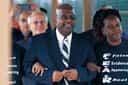
Curtis Flowers, a Black man who spent more than 22 years in prison and was on death row in Mississippi before the US Supreme Court threw out his conviction and death sentence , has died. He was 56. Flowers' family confirmed that he died Wednesday at his home …
The plaintiff insisted his fourth amendment rights had been violated by police "knock and talk" investigations.
This case concerns whether a state public accommodation law overrides the First Amendment liberty interests of a culturally based women’s spa, its female employees, and unclothed women and girls as young as thirteen years old in their intimate spaces. The pos…

According to the league, Kalshi and other prediction markets “threaten game integrity” because many event contracts are “highly susceptible to manipulation.”

Andhra Pradesh SEC tells collectors and police to be poll-ready for local body elections at short notice, with phased polls planned pending Supreme Court ruling.

Supreme Court justices write and publish books from time to time. Some, like the autobiographies of Clarence Thomas and Sonia Sotomayor. can be interesting to a general audience. Others are meant to be read by lawyers, judges, and law professors. Only rarely …

The NIA court in Jammu has rejected Shabir Shah's bail plea despite a previous Supreme Court decision. Family members express disappointment and plan to approach the High Court for another bail plea. Shah has spent almost four decades in jail, with serious he…
Texas court denies request to stop man’s execution over Christa Pike’s failed lethal injectionNBC News Texas Plans Execution After Botched Lethal Injection in TennesseeThe New York Times Texas awaits U.S. Supreme Court decision on execution of Silsbee killer …
Recent Supreme Court coverage via NewsAPI, refreshed through the day.
The record
How VotePredictor SCOTUS is built, its full 1970–2025 walk-forward backtest, the academic benchmark, and every forecaster ranked: SCOTUS — the record.